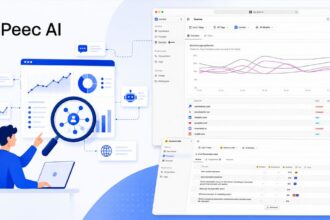

I started noticing the shift when some helpful blog posts still ranked well, but felt almost invisible once AI answers appeared above them. The search result was no longer just a list of links.
It had become a summary, a filter, and sometimes the whole first impression of a brand.
That is where AI search optimization starts to matter. For brands, blogs, freelancers, and SaaS builders, the question is no longer only “How do we rank?” It is also “How do we become the source AI systems understand, trust, and surface when people ask the questions that matter?”
The rise of AI in search: understanding AI search optimization
AI search optimization is the practice of making your brand, blog, and content easier for AI-powered search systems to understand, trust, summarize, and cite.
Traditional SEO still matters, but the game is no longer only about ranking a blue link on page one. Search engines are increasingly answering questions directly, combining information from multiple sources, and presenting users with a compressed answer before they click anything
That changes the job
For brands and blogs, AI search optimization means thinking beyond keywords and rankings. You are now optimizing for retrieval, interpretation, and inclusion. Can an AI system quickly identify what your page is about? Can it extract a clean answer from your article? Does your content show enough credibility for the system to treat it as a reliable source? These questions are becoming just as important as title tags and backlinks.
I like to think of AI search as a demanding editor with very little patience. It scans, compares, verifies, and compresses. If your content is vague, buried under fluff, or written in a way that hides the main answer, it becomes harder for AI systems to use it. Not impossible, but harder
The shift matters especially for freelancers, SaaS builders, marketers, and indie publishers because organic visibility has often been the affordable growth channel
A blog post could attract leads for months. A comparison page could bring high-intent traffic. A how-to guide could build trust before someone ever booked a call or signed up for a product.
That still happens.
What is changing is the path between query and click. AI search optimization helps you stay visible when search results become more answer-led, conversational, and selective. The brands that adapt early will not just chase traffic. They will build content libraries that AI systems can understand, quote, and associate with specific topics.
Navigating the new landscape: Google AI Overview SEO and generative engine optimization
Google AI Overview SEO sits at the center of this conversation because AI-generated answers now appear for many informational and commercial queries.
Instead of showing only traditional results, Google may summarize the topic, mention options, explain steps, or provide a direct answer with supporting links.
For users, that can feel convenient. For publishers, it can feel uncomfortable.
A searcher who gets a complete answer on the results page may not click through. At the same time, being cited or referenced inside an AI-generated answer can create a new kind of visibility
It is not always visible in the same way as a ranking position, but it can influence brand recognition, trust, and future searches.
The uncomfortable part is that the rules are less obvious. With classic SEO, you could inspect rankings, impressions, click-through rates, and backlinks. With AI-generated search experiences, you are also dealing with synthesis. Your page might help shape an answer without receiving a predictable click. Another page might rank below you but still get pulled into an AI Overview because it provides a cleaner definition, stronger structure, or more direct evidence.
That is where generative engine optimization comes in.
GEO optimization, or generative engine optimization, focuses on improving how content performs inside AI-generated responses. The goal is not to “trick” an AI model. That mindset usually leads to thin, over-structured content that feels weird to humans. The better goal is to make your content easier to retrieve, parse, verify, and summarize.
Here is a simple way to compare the old and new emphasis:
| SEO focus | AI search focus |
|---|---|
| Ranking position | Answer inclusion |
| Keyword targeting | Entity clarity |
| Backlink authority | Source trust |
| Click-through rate | Citation visibility |
| Page optimization | Content extractability |
This does not mean traditional SEO is dead. Honestly, that phrase has been overused every time search changes. Technical health, search intent, backlinks, topical authority, internal structure, and useful content are still the foundation. AI search simply adds another layer.
Google AI Overview SEO rewards content that answers questions clearly, supports claims, and fits into a broader topical context. Generative engines need confidence. They tend to favor pages that present information in a structured, consistent, and verifiable way.
For a blog, that might mean writing clearer definitions, adding comparison tables, breaking down processes, and connecting related concepts without stuffing keywords
For a SaaS brand, it might mean building educational pages that explain the problem your product solves, not just landing pages that push features.
A useful mental shift is this: your content should be easy for a smart assistant to quote without misunderstanding you.
That requires precision. If you write “AI tools can improve productivity,” the statement is true but weak. If you explain which workflow, which bottleneck, which user type, and which measurable outcome, the content becomes more usable. AI systems thrive on specific, well-framed information.
The brands that win in this landscape will probably not be the ones publishing the most. They will be the ones creating content that is clear enough for machines and useful enough for humans. That balance sounds simple. In practice, it takes discipline.
Practical strategies to optimize for AI search
Optimizing for AI search starts with the same question I use for any serious content system: what should the brand be known for?
Without a clear answer AI search optimization becomes scattered. One article targets automation, another talks about productivity, another reviews random tools, and none of them build a strong topical signal. AI systems look for patterns. If your site consistently explains one domain with depth, clarity, and useful examples, you give search engines more reasons to associate your brand with that domain.
Build strong topical foundations
A strong AI search strategy usually begins with topic clusters. Not because clusters are trendy, but because they help both humans and machines understand your expertise. A pillar page covers the broad topic. Supporting articles go deeper into subtopics. Practical articles explain workflows, tools, and implementation details.
For BoostflowAI’s audience, this matters a lot. A freelancer searching for “AI workflow automation” might later search for “AI SEO automation,” then “best AI tools for content briefs,” then “how to automate reporting.” If your content connects these ideas naturally, your brand becomes easier to recognize as a source across the whole journey.
You do not need to publish hundreds of pages. A lean, well-organized cluster can outperform a messy content library with twice the volume.
A practical AI search optimization structure might look like this:
| Content layer | Purpose | Example |
|---|---|---|
| Pillar guide | Broad understanding | AI search optimization |
| Satellite article | Focused depth | Google AI Overview SEO |
| Workflow article | Practical execution | Track AI citations |
| Comparison page | Decision support | GEO tools compared |
This kind of architecture helps you avoid isolated articles. Each page has a role. Each topic supports a bigger narrative. That is good SEO, and it is also good GEO optimization.
Make answers easy to extract
AI systems often need clean, direct passages that can be summarized without distortion. That means your articles should include clear definitions, short answer blocks, useful comparisons, and step-by-step explanations where appropriate.
I do not mean turning every article into a dry encyclopedia entry. Please don’t. People still want a human voice, practical judgment, and context. The trick is to blend clarity with experience.
A strong section might start with a direct answer, then expand into nuance. For example, if you are explaining AI visibility tracking, define it first. Then explain why it is difficult, what can be measured, and which signals are worth watching. That structure gives AI systems a clean answer while giving readers the depth they came for.
Useful patterns include:
- Start key sections with a clear, one-sentence answer.
- Use descriptive headings that match real search questions.
- Add comparison tables when users need to evaluate options.
- Break complex workflows into steps with specific outcomes.
- Include examples that show how the advice works in practice.
This is also where many blogs quietly lose visibility. They bury the useful answer after six paragraphs of setup. AI systems may still understand the page, but you are making them work harder. Readers feel the same friction.
Strengthen technical signals
Technical SEO does not disappear in AI search. If anything, it becomes more important because AI systems need reliable access to your content. Slow pages, poor indexing, broken schema, messy templates, and thin duplicate pages can all weaken your visibility.
The basics are still worth doing properly: clean crawl paths, fast loading pages, mobile usability, XML sitemaps, canonical tags, and structured data where it fits. Schema is not a magic ticket into AI Overviews but it can help search engines understand entities, article types, authors, products, reviews, and FAQs.
For brands and blogs, author information deserves special attention. If your content gives advice about tools, marketing systems, automation workflows or business decisions, readers want to know who is behind it. AI systems also need signals of credibility. A real author bio, consistent expertise, transparent editorial standards, and updated content can all support trust.
Freshness matters too, especially in AI tools and automation. A guide from 2023 can become outdated quickly when platforms change features, pricing, or integrations. Updating old posts is often more valuable than publishing another generic article. I have seen content libraries improve simply by refreshing screenshots, rewriting outdated tool mentions, and adding clearer examples.
The boring maintenance work compounds. No biggie, just the part everyone likes to skip.
Optimize around entities, not only keywords
Keywords still help define intent, but AI search relies heavily on entities and relationships. In plain English, that means search engines need to understand the people, tools, concepts, brands, and categories connected to your topic.
For AI search optimization, you should make these relationships explicit. If you mention generative engine optimization, explain how it relates to AI Overviews, ChatGPT-style answers, Perplexity, Bing Copilot, and traditional SEO. If you discuss AI visibility tracking, connect it to citations, brand mentions, referral traffic, and query monitoring.
Entity-rich content feels more complete because it reflects how people actually think. Nobody searches in perfect keyword clusters. They move between problems, tools, use cases, and decisions.
That is where practical experience helps. A generic article might say, “Use AI tools to improve SEO.” A stronger article explains how a marketer might use AI to cluster keywords, draft briefs, compare SERP patterns, and monitor whether pages appear in AI-generated answers. One version sounds like filler. The other gives search systems and readers more context to work with.
Crafting content for AI-powered search engines
Content that performs in AI-powered search usually has one clear quality: it reduces ambiguity. The reader understands it. The search engine understands it. An AI-generated answer can summarize it without twisting the meaning.
That does not mean every article should be short. Some topics need depth. AI search optimization itself is not a 600-word topic if you want to cover strategy, measurement, technical structure, and content design. The key is not brevity alone. It is organized depth.
A good article should answer the main question, then anticipate the next questions. When someone searches “optimize for AI search,” they may also wonder whether they need schema, whether AI Overviews reduce traffic, whether backlinks still matter, and how to track brand mentions in AI tools. Covering these adjacent questions makes the article more useful and more semantically complete.
Strong AI-friendly content often includes a few recurring elements:
- A clear definition near the beginning of the relevant section.
- Specific examples tied to realistic use cases.
- Concise explanations before deeper commentary.
- Tables that simplify comparisons or frameworks.
- Updated information when the topic changes quickly.
- Original observations that are not copied from the SERP.
The last point is easy to underestimate. AI systems can summarize common knowledge all day. If your article only repeats what every competing page says, it gives both humans and machines little reason to prefer your version. Originality does not have to mean groundbreaking research. It can be a practical framework, a workflow you tested, a mistake you noticed, or a sharper way to explain the problem.
For a brand blog, this is where the writer’s judgment becomes valuable. A plain SEO checklist might be accurate, but a page that says, “Here is how I would structure a 20-page content cluster for AI visibility in a SaaS niche” is more distinctive. It gives readers something they can use.
Content formats also matter. AI-powered search tends to work well with content that has modular sections. Definitions, comparisons, pros and cons, process breakdowns, short case-style examples, and decision frameworks are easier to synthesize than long opinion essays with buried takeaways.
Here is a simple content design framework:
| Content element | Why it helps |
|---|---|
| Definitions | Clarifies meaning fast |
| Examples | Adds practical context |
| Tables | Supports quick comparison |
| Steps | Shows implementation |
| Updates | Signals freshness |
Writing style plays a role too. Overly polished marketing language can weaken clarity. Phrases like “unlock seamless innovation” sound nice in a pitch deck, but they do not help an AI system identify a concrete answer. They do not help readers much either.
A better approach is direct, specific, and lightly opinionated. Say what works. Say where the limits are. Mention trade-offs. A blog that only speaks in perfect claims feels less trustworthy than one that explains the nuance.
For example, AI search optimization can help you improve visibility, but it will not guarantee citations in every AI Overview. Structured data can support understanding, but it is not a shortcut around weak content. Publishing topical clusters can build authority, but only if the pages are genuinely useful.
That kind of honesty makes content stronger. Weirdly enough, it is also better marketing.
Tracking your success: AI visibility and performance metrics
AI visibility tracking is still messier than traditional rank tracking. You can monitor rankings with established SEO tools, but AI-generated answers are more dynamic. They may change based on location, query wording, personalization, device, and ongoing model updates.
Still, you can track enough to make better decisions.
Start by separating direct performance from assisted visibility. Direct performance includes clicks, impressions, rankings, conversions, and referral traffic. Assisted visibility includes AI citations, brand mentions, inclusion in generated answers, and appearance across answer engines. The second group is harder to measure, but it is becoming too important to ignore.
For a practical workflow, choose a fixed set of queries and monitor them regularly. Include informational searches, comparison queries, problem-aware searches, and commercial investigation terms. For example, a SaaS blog might track “best AI tools for SEO briefs,” “how to automate content workflows,” and “AI search optimization software.” The goal is not to check random keywords whenever curiosity hits. You want a repeatable benchmark.
Useful AI visibility tracking signals include:
- Whether your brand appears in AI-generated answers.
- Whether your pages are cited as supporting sources.
- Which competitors appear more often than you.
- Which topics trigger AI Overviews most often.
- How traffic changes on pages targeting AI-heavy queries.
- Whether branded searches increase after AI exposure.
This is where the work becomes a little detective-like. A page might lose clicks but still support brand discovery if it appears inside AI answers. Another page might keep rankings but lose value because the search result now answers the query directly. Looking only at traffic can make you panic too early. Looking only at AI citations can make you feel successful without revenue impact.
You need both views.
A simple tracking setup can start with three layers:
| Layer | What to monitor | Why it matters |
|---|---|---|
| Search data | Impressions and clicks | Shows demand shifts |
| AI presence | Citations and mentions | Shows answer visibility |
| Business impact | Leads and signups | Shows real value |
Specialized tools for AI visibility tracking are starting to appear, and existing SEO platforms are adding features around AI Overviews and answer-engine presence. Still, manual review is worth keeping in the process, especially for important commercial queries. Tools can tell you where you appear. Human review tells you how you appear.
That distinction matters. Being cited in a weak or irrelevant context may not help much. Being mentioned as one of three trusted options for a buying-stage query is far more valuable.
I would also track content-level patterns. Which pages get cited? Are they definition-heavy guides, comparison pages, original research, or practical workflows? Which competitors appear, and what do their pages do better? Sometimes the lesson is obvious: they have clearer tables, stronger author signals, fresher updates, or more direct answers.
The goal is not to obsess over every AI result. Search is too fluid for that. The goal is to build a feedback loop so your content strategy improves over time instead of relying on guesswork.
The future of AI search: staying ahead of the curve
AI search will keep moving toward more conversational, personalized, and task-oriented experiences. Users will not only ask for information. They will ask search systems to compare tools, summarize reviews, build plans, recommend workflows, and make decisions faster.
That means brands and blogs need to become more than content publishers. They need to become reliable knowledge sources.
The safest long-term strategy is to keep improving the things that are hard to fake: expertise, clarity, original insight, useful examples, and trust. Tactics will change. Interfaces will change. The need for credible, well-structured information will stay.
For teams working in AI tools, productivity, automation, SaaS, or marketing, experimentation should become part of the editorial process. Test how your pages appear in AI Overviews. Compare answer engines. Refresh old guides. Add original examples. Track brand mentions. Watch how query behavior changes when users start asking longer, more specific questions.
Not every experiment will work. That is fine.
AI search optimization is not a one-time checklist. It is a new layer of search strategy that rewards brands willing to write with more precision, structure their knowledge better, and pay attention to how discovery is changing. The brands that stay curious will have a real advantage, especially while everyone else is still trying to optimize for the search page that existed five years ago.
AI search optimization is still messy, and honestly, that is part of what makes it worth watching closely. Rankings, citations, clicks, and brand mentions are starting to overlap in new ways, so the best approach is not to chase every update. It is to build content that is clear, useful, trustworthy, and easy for both humans and AI systems to understand.
For brands and blogs, this is a good moment to rethink what visibility really means. The search page is changing, but the need for sharp thinking, practical answers, and credible expertise has not gone anywhere. What are you noticing in your own search results lately?
FAQ
What is AI search optimization?
AI search optimization involves adapting your content and SEO strategies to rank effectively in search results powered by artificial intelligence, such as Google’s AI Overviews and other generative AI experiences. It focuses on providing clear, concise, and authoritative answers that AI models can easily synthesize.
How does Google’s AI Overview impact SEO?
Google’s AI Overview can significantly impact SEO by providing direct answers at the top of search results, potentially reducing clicks to traditional organic listings. Brands and blogs must optimize to be featured in these overviews by offering high-quality, structured, and trustworthy content.
What is Generative Engine Optimization (GEO)?
Generative Engine Optimization (GEO) is a specialized form of SEO focused on optimizing content for generative AI models used in search engines. It emphasizes creating highly relevant, factual, and well-structured information that AI can easily understand, summarize, and present as part of its generated responses.
How can brands track their AI visibility?
Tracking AI visibility involves monitoring when your content is cited or used in AI-generated search results, like Google’s AI Overviews. This can be done through manual checks, specialized SEO tools that track AI citations, and analyzing traffic patterns for content that aligns with AI-summarized topics.
Is AI search optimization different from traditional SEO?
While sharing fundamental principles with traditional SEO (like quality content and user experience), AI search optimization places a greater emphasis on clarity, factual accuracy, structured data, and direct answerability. It focuses on satisfying the AI’s need for concise, verifiable information rather than solely relying on keyword density or backlinks.

Artificial Intelligence Specialist | AI-Driven Workflow Strategist