Checking rankings sounds simple until you are the person doing it between client calls, content updates, and a dozen other small business tasks. One keyword drops, another page climbs, a client asks for a report, and suddenly SEO feels less like strategy and more like tab management.
That is why SE Ranking can be useful for small teams. It gives freelancers, marketers, and lean SaaS teams a more organized way to track rankings, monitor competitors, and turn SEO progress into reports without rebuilding the same workflow every week.
The challenge of SEO for small teams
Small teams rarely struggle with SEO because they do not care. They struggle because SEO becomes one more system to maintain between client work, product updates, content planning, and reporting. That is where SE Ranking can fit well: not as a magic shortcut, but as a cleaner way to keep ranking data, reports, and priorities in one place.
Streamlined rank tracking with SE Ranking for small business
For a freelancer, founder, or tiny marketing team, rank tracking for small business needs to be simple enough to check quickly, but detailed enough to trust. SE Ranking for small business does a good job here because it lets you monitor keywords without turning the task into a spreadsheet ritual.
Daily visibility without the clutter
You can track keyword positions across search engines, locations, and devices, which matters if you serve local markets or compare desktop and mobile visibility. I like this for small teams because it removes the vague “are we improving?” conversation. You can see which pages are moving, which terms are slipping, and where attention is needed.
That pairs naturally with a broader small business SEO process, especially if you are trying to improve SEO without hiring an agency.
Gaining quick insights from your SE Ranking SEO dashboard
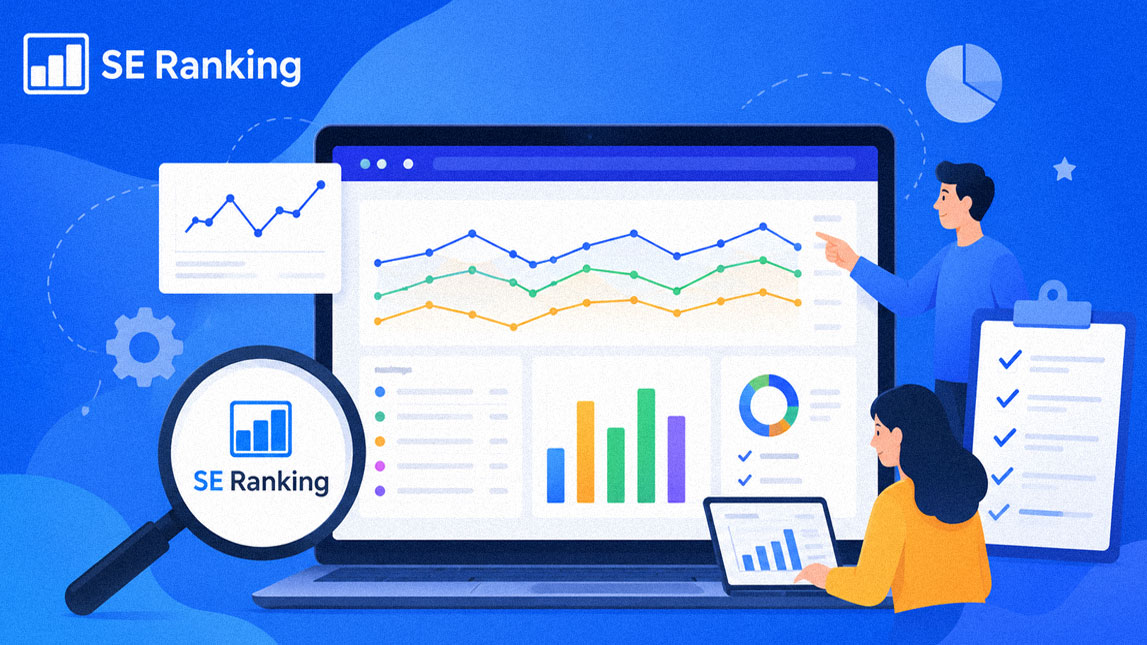
An SEO dashboard is only useful if it helps you decide what to do next. SE Ranking’s dashboard brings together ranking movements, traffic signals, technical checks, backlinks, and competitor snapshots, so small teams do not have to jump between five tabs just to understand the week.
Here is a simple way to think about it:
| Dashboard area | Why it matters |
|---|---|
| Keyword movement | Spot ranking changes fast |
| Website audit | Find technical blockers |
| Competitor view | See market shifts |
| Backlink data | Track authority growth |
The real benefit is prioritization. Instead of reacting to random SEO tasks, you can quickly decide whether this week needs content updates, technical cleanup, link analysis, or competitor review.
Saving time with automated SE Ranking reports
Manual reporting quietly eats hours. One report becomes three screenshots, a copied chart, a few notes, then another version for a client or founder who wants a cleaner summary. No biggie once. Painful every month.
SE Ranking reports help by turning recurring updates into a repeatable workflow. You can customize what appears in the report, schedule delivery, and keep the format consistent. For agencies or freelancers, white-label reporting is especially useful because it keeps client communication polished without rebuilding the same document again and again.
A lighter reporting workflow
A practical setup could look like this:
- Track the main business keywords weekly.
- Send automated SEO reports monthly.
- Highlight ranking wins and drops manually.
- Add next-step recommendations before sharing.
Practical competitor monitoring for small teams
Competitor research sounds like a big-agency activity, but it does not have to be. With SE Ranking, a small team can monitor competitor rankings, backlink profiles, and paid search activity without turning the process into a full research project.
The useful part is pattern spotting. Maybe a competitor starts gaining positions because they refreshed old pages. Maybe they are building links to a comparison article. Maybe their paid campaigns reveal keywords worth testing organically. None of this requires a huge SEO department, just a habit of checking the right signals.
For small teams, that is the sweet spot: enough data to make sharper decisions, without spending the whole afternoon pretending to be an analyst.
SE Ranking makes the most sense when you treat it as a practical SEO control center, not just another dashboard to check. For a small team, the value is in reducing the mental load: rankings are easier to follow, reports are easier to send, and competitor movements are easier to notice before they become a problem.
It will not replace strategy, and honestly, that is a good thing. The tool handles the repetitive tracking work, while you keep the human part: deciding what matters, what to improve next, and where SEO can actually support the business.

Artificial Intelligence Specialist | AI-Driven Workflow Strategist